If you have ever watched a video of a parrot accurately identifying colors, mimicking a telephone, or even asking existential questions, there is a very good chance you were watching a Congo African Grey. These birds aren’t just pets; they are widely considered the Einsteins of the avian world. Their cognitive abilities rival those of a young human child, making them fascinating companions for the right owner. contact us
Owning one of these majestic birds is a lifelong commitment that brings incredible rewards, but it also comes with specific challenges. They require more than just a cage and some seed; they need interaction, mental stimulation, and a very specific diet to thrive. Whether you are a seasoned bird enthusiast or someone considering your first large parrot, understanding the nuances of this species is crucial. contact us
In this guide, we will dive deep into everything that makes the Congo African Grey special. We will explore their natural history, break down their complex dietary needs, and give you the roadmap to providing the best possible care for these intelligent creatures.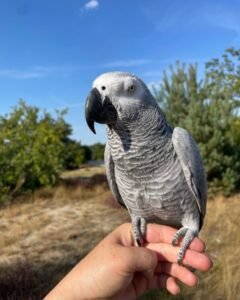
What is a Congo African Grey?
The Congo African Grey (Psittacus erithacus) is the larger of the two main subspecies of African Grey parrots, the other being the Timneh African Grey. While they share many traits, the Congo is distinct in appearance and size. They are immediately recognizable by their sleek, ash-grey feathers that look almost like armor, contrasted sharply by a brilliant, bright red tail. contact us
Physical Characteristics
When you see a Congo African Grey up close, the first thing you notice is their size. They typically measure between 12 to 14 inches from beak to tail and weigh anywhere from 400 to 650 grams. Their beak is entirely black, a key differentiator from the Timneh, which has a bone-colored upper mandible.
Their eyes also tell a story of their age. Young birds have dark, almost black irises. As they mature, this color lightens to a soft grey and eventually becomes a striking pale yellow or silver in adulthood. This transformation usually happens within the first few years of life. contact us
Personality and Intelligence
To call a Congo African Grey “smart” is an understatement. The most famous example is Alex, a parrot studied by Dr. Irene Pepperberg for thirty years. Alex didn’t just mimic; he understood concepts like “bigger,” “smaller,” “same,” and “different.” He could even identify numbers and shapes. contact us
This high intelligence means they have complex personalities. They are often described as “neophobic,” meaning they can be afraid of new things. A new toy or a moved piece of furniture might be met with suspicion until they have had time to analyze it. They are sensitive to their owner’s moods and can become stressed if the household is chaotic. However, once they bond with you, they are affectionate, loyal, and endlessly entertaining. contact us
Natural Habitat and Origins
Understanding where these birds come from helps us understand how to care for them in captivity. The Congo African Grey is native to the equatorial regions of Africa. Their range is vast, stretching from the Ivory Coast through to Kenya and Tanzania.
Life in the Rainforest
In the wild, these birds inhabit dense lowland forests, mangroves, and wooded savannas. They are highly social creatures, often gathering in large flocks that can number in the hundreds. These flocks serve as protection against predators and a social hub for finding mates. contact us
They are canopy dwellers, spending much of their time high up in the trees. This instinct to be high up often translates to pet behavior; you might notice your bird prefers the highest perch in the cage or on a play stand. It makes them feel secure.
Conservation Status
Unfortunately, the popularity of the Congo African Grey has come at a cost. They are currently listed as Endangered by the IUCN (International Union for Conservation of Nature) due to habitat loss and the illegal pet trade.
If you are looking to bring one into your home, it is ethically imperative to ensure you are buying a captive-bred bird from a reputable breeder. Never support the market for wild-caught birds. Captive-bred birds are not only healthier and better adjusted to life with humans, but purchasing them also protects wild populations. contact us
The Congo African Grey Diet: More Than Just Seeds
One of the biggest mistakes new owners make is feeding an all-seed diet. In the wild, these birds eat a varied diet of palm nuts, fruits, berries, seeds, and leafy vegetation. A seed-only diet in captivity leads to malnutrition, specifically Vitamin A and Calcium deficiencies, and obesity.
Pellets: The Foundation
A high-quality, organic pellet should make up about 75% of your bird’s diet. Pellets are formulated to provide balanced nutrition in every bite, preventing the bird from “picking out the good stuff” and leaving the healthy bits behind, which they will inevitably do with seed mixes. contact us
Fresh Foods: The Essential Variety
The remaining 25% of the diet should consist of fresh vegetables, fruits, and healthy grains. Variety is key here to keep their active minds engaged and their bodies healthy.
Excellent vegetables include:
- Kale and leafy greens (high in calcium)
- Carrots and sweet potatoes (cooked slightly to boost Vitamin A absorption)
- Peppers (they love the seeds, and they aren’t sensitive to the heat like humans are)
- Broccoli and cauliflower
Fruits should be treated as treats due to sugar content:
- Apples (without seeds)
- Berries
- Papaya
- Mango
Foods to Avoid:
Never feed your parrot avocado, chocolate, caffeine, alcohol, or onions. These are toxic and can be fatal.
Housing Your Feathered Genius
A Congo African Grey is not a bird that can be kept in a small cage in the corner of a room. They need space to move, stretch, and play.
Cage Size Requirements
The absolute minimum cage size for a single African Grey should be 36 inches wide, 24 inches deep, and 48 inches tall. However, bigger is always better. If you can fit a larger aviary-style cage in your home, your bird will thank you for it.
Bar spacing is also critical. It should be between 3/4 inch to 1 inch to prevent the bird from getting its head stuck or escaping.
Perches and Toys
Inside the cage, variety is necessary for foot health. Uniform dowel perches can cause pressure sores (bumblefoot). Instead, use natural wood branches of varying thicknesses and textures. Rope perches are also good for soft comfort, but watch for fraying threads that can catch toes.
Toys are non-negotiable. A bored Congo African Grey is a destructive one. They need puzzle toys that challenge their brains. Foraging toys, which require the bird to manipulate a mechanism to get a treat, are excellent for simulating natural behaviors.
They also love to chew. Provide plenty of wood, cardboard, and safe paper products for them to destroy. It is messy, but it is a sign of a happy, engaged bird. contact us
Health and Care Requirements
These birds are generally hardy, with a lifespan that can reach 40 to 60 years in captivity. This longevity means you need to be proactive about their health.
Common Health Issues
Hypocalcemia: African Greys are uniquely prone to low calcium levels. This can cause seizures and brittle bones. Ensuring a diet rich in calcium and providing access to full-spectrum lighting (UVB lamps) helps them metabolize the nutrient correctly.
Feather Plucking: This is perhaps the most heartbreaking issue owners face. Because they are so intelligent and sensitive, stress, boredom, or poor diet can lead them to chew or pluck their own feathers. It is often a psychological issue rather than a physical one, though medical causes should always be ruled out first.
Respiratory Illness: Like all birds, they have sensitive respiratory systems. They should be kept away from drafts, and you must never use non-stick cookware (Teflon) around them. The fumes from overheated non-stick pans are instantly fatal to birds. contact us
Grooming
Regular nail trims are necessary to prevent scratches and getting caught in toys. Wing clipping is a personal choice; some owners clip for safety to prevent flying into windows or ceiling fans, while others prefer to let their birds fly for exercise. If you choose to keep your bird flighted, you must “bird-proof” your home meticulously.
Socialization and Training
The Congo African Grey is not a “velcro bird” like a Cockatoo might be. They are often more independent and observant. However, they need significant social interaction. contact us
The One-Person Myth
It is often said that Greys bond with only one person. While they often have a favorite, this “one-person bird” syndrome is usually a result of lack of socialization. If only one person handles, feeds, and plays with the bird, the bird will naturally reject others. To prevent this, encourage all family members to interact with the parrot. Have different people offer treats or handle training sessions. contact us
Talking Ability
Most people want a Grey because they talk. While the Congo African Grey is arguably the best talker in the animal kingdom, it is never a guarantee. Some birds may never speak a word, choosing instead to mimic the microwave, the doorbell, or the backing-up truck outside.
If you want to teach them to talk, talk to them like a toddler. Narrate your day. “I’m making coffee,” or “Here is your apple.” They learn by association and context. They don’t just repeat sounds; they learn when to use them. contact us
The Cost of Ownership
Owning a Congo African Grey is a financial investment. The initial cost of the bird can range from $2,500 to $4,000 depending on the breeder and location.
Beyond the purchase price, consider these costs:
- Cage: $300 – $800+
- Toys and Perches: $30 – $50 monthly (they will destroy them)
- High-quality food: $40 – $60 monthly
- Avian Vet visits: $200+ annually for checkups, much more for emergencies.
You must be prepared for these ongoing expenses for the next half-century.
Why They Are Popular Pets
Despite the challenges, the cost, and the mess, the Congo African Grey remains one of the most popular parrots in the world. Why?
It is the connection.
When you look into the eyes of a Congo African Grey, you see someone looking back. They are capable of empathy. They can be incredibly funny, learning to laugh at the right moments in a conversation. They become true members of the family, often outliving the people who bought them and being passed down to the next generation.
Their vocal abilities are uncanny, providing endless amusement. But more than the talking, it is their quiet companionship that owners cherish. Having a Grey perch on your shoulder while you read or work, occasionally nuzzling your ear or muttering a soft “hello,” is a unique joy. contact us
Conclusion
The Congo African Grey is not a starter pet. They are complex, demanding, and messy. They require a stable environment and a patient owner who understands that they are living with a highly intelligent wild animal, not a domesticated dog.
However, if you can meet their needs, they are incomparable companions. The bond you form with a Grey is deep and sophisticated. They will challenge you, make you laugh, and likely outsmart you regularly. contact us
If you are ready to bring one of these gray geniuses into your life, start by preparing your home and your schedule. Do your research, find a qualified avian vet, and get ready for a 50-year adventure.
Are you ready to give your parrot the best life possible?